

Thyroid and Head & Neck Cancer Surgeon
Expert Thyroid Cancer Surgeon in India
Dr. Akshat Malik
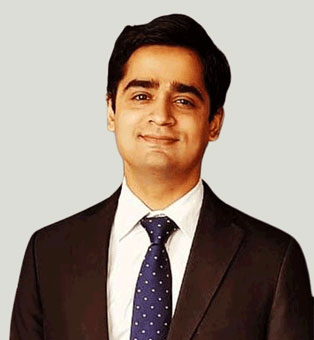
Dr. Akshat Malik is a leading Head & Neck and Thyroid Cancer Surgeon, known for his expertise in treating complex thyroid tumours, neck masses, and cancers of the upper aerodigestive tract. He holds an MCh in Head & Neck Surgery, the highest level of surgical training in this field.
After completing his MS in Surgery from Delhi University, he pursued dedicated training in cancer surgery at the Tata Memorial Centre, Mumbai—India’s premier cancer institute—where he earned his MCh in Head & Neck Surgery.
Dr. Malik was selected for the prestigious and highly competitive Royal College of Surgeons Senior Clinical Fellowship in Advanced Head & Neck Surgery at Imperial College NHS Trust, London, where he got an opportunity to refine his skills further. This international experience adds to his expertise in managing complex and advanced thyroid and head–neck cancers.
He holds FRCS from Royal College of England and FACS from American College of Surgeons.
He is a trained robotic surgeon and has expertise in performing complex robotic surgeries, remote access/scarless thyroid surgeries.
Patients appreciate his skilled surgical care, clear communication, and personalised treatment plans aimed at achieving the best possible outcomes.
Our Services
Expert thyroid and head neck care offering accurate diagnosis, advanced surgery, personalized treatment, faster recovery, and long-term outcomes.
Thyroidectomy
This means removal of one lobe of thyroid gland, along with the adjoining part of the isthmus...
Read More
Robotic Thyroidectomy
For a few select cases with smaller nodules, it may be possible to avoid the incision on the neck to remove...
Read More
Nerve Monitoring
During thyroid surgery, protecting the nerve that controls your vocal cords—the recurrent laryngeal...
Read More
Parathyroid Preservation
The parathyroid glands regulate calcium levels in your body. During thyroid surgery, they need...
Read MoreWhy do you need an expert thyroid surgeon?
Why choose Dr Akshat Malik for thyroid surgery?
Thyroid surgery is delicate and requires precision. The thyroid gland sits close to important structures like the voice nerves, parathyroid glands (which control calcium), and major blood vessels. An experienced thyroid surgeon understands how to operate safely around these areas while removing the disease completely.
Choosing a specialist improves your chances of:
- Preserving your voice by protecting the recurrent laryngeal nerves
- Avoiding complications, such as low calcium levels after surgery

Google Reviews
What Our Patient's Say
Sunita Kumari Singh
“My. Brother Sujit Kumar Singh is getting his treatment under him since 2023.Dr. Akshat Malik is an excellent oncologist. He listens carefully, explains everything clearly, and provides treatment with great care and expertise. Although max is very expensive but Dr. Akshat Malik always guides me with best possiblitiy.Highly recommended. May Almighty bless him with more success. I have not seen a doctor like him responding to every calls and msgs. Thank you Dr. Akshat Malik for your support throughout treatment”
Donga Shandilya
“Dr Akshat Malik is our Doctor Consultant and surgeon for my father's treatment. He is very kind and down to earth. He personally called after the surgery and told us that the surgery was successful. Everytime we visit, he is always very welcoming and listen to whatever we say. We feel very satisfied with our experience. And additionally, his Coordinator Sonam is also helping us in everything like OPD visit, Billing, Admission, ward shift from ICU and checkup.”
DJ YUVRAJ YUVI SOUNDS
“I recently had a consultation with Dr. Akshat Malik, and I am extremely satisfied with the experience. Dr. Malik is not only highly knowledgeable and professional, but also very patient and understanding. He explained everything clearly and made me feel completely at ease throughout the process. A special thanks to Miss Sonam for her kind assistance and support during my visit. She was very courteous and helpful, making the entire experience smooth and stress-free. Highly recommend Dr. Akshat Malik and his team for anyone seeking expert medical care.”
A K dwivedi
“I had the privilege of being treated by Dr Akshat Malik at Max Super Speciality Hospital, Saket, and would like to especially highlight the exceptional support provided by Sonam. From my first appointment through post-treatment follow-ups, Sonam was always available, communicated clearly, and made sure each step was smooth and reassuring. Dr Malik’s expertise and dedication were clearly visible throughout my care, and combined with Sonam’s professionalism and kindness, the experience was truly outstanding. I highly recommend Dr Malik and his team—thank you, Sonam, for going above and beyond.”
Anushka singh
“Akshat Sir is one of the best surgeon, I went through surgery for thyroid gland and lymph nodes and he has been their throughout the journey like family he guided us and helped us understand the necessities of each step involved in the surgery. Pre and post surgery he has been responsive on text and call on real time basis. I am on my recovery journey and all I want to say is he is “faith” for me in the form of white coat ( Doctor ). Thankyou so much Sir for saving my life. Sonam is very helpful as she guided us with the admission and appointment process. She is very kind and helpful. Thankyou Sonam”
Ati Devi
“Dr Akshat Malik He's very humble and kind and a great doctor he performed my mother's surgery of right thyroidectomy. He helped us alot throughout the treatment , we are so thankful to him and sonam ma'am is also very humble and kind . She helped us alot with all kind of work. I will always be thankful to them .”
More About Thyroid Cancers - FAQs
Most thyroid cancers do not cause symptoms early. They are often found during routine ultrasound.
Possible symptoms may include:
- A painless lump in the neck
- Hoarseness or voice change
- Difficulty swallowing
- Neck discomfort
- Swollen lymph nodes
Some patients may present with symptoms of distant metastases, like bone pain, swelling, fracture, etc.
Many patients have no symptoms at all, which is why regular evaluation is important.
No. Over 90% of thyroid nodules are benign.
An ultrasound and, if needed, a fine needle aspiration (FNA) test help determine if cancer is present.
Diagnosis usually includes:
- Neck ultrasound
- FNAC (Fine Needle Aspiration Cytology) from thyroid and lymph nodes if they appear suspicious. These should always done under ultrasound guidance
- In equivocal cases, a guided biopsy may also be needed as FNAC may not give us the correct picture.
- Blood tests
- Occasionally CT/MRI for specific cases. Certain cases may even need a PET scan.
- Medullary thyroid cancer – S calcitonin, S CEA, Plasma metanephrines, DOPA scan.
Genetic testing is recommended for suspected medullary thyroid cancer (RET gene). It may also be done for certain aggressive cancers like anaplastic or poorly differentiated.
Treatment depends on the type and stage but may include:
- Surgery (most common and often curative)
- Radioactive iodine therapy (for certain types)
- Ablation- radiofrequency or microwave – useful for certain cases
- Active surveillance (for select cases)
- Thyroid hormone therapy – for suppression
- Targeted or immunotherapy (for specific advanced cancers)
- External beam radiation (selected cases)
Your doctor will customize treatment based on your cancer type and overall health.
If a hemi-thyroidectomy is done, then generally no medicines are required.
If your entire thyroid is removed, you will need lifelong thyroid hormone tablets.
These hormones:
- Replace what the thyroid used to make
- Help prevent cancer recurrence in some cases
Sometimes, calcium medicine may also be needed after total thyroidectomy.
Most thyroid cancers, especially papillary and follicular types, have excellent long-term survival—often above 95%.
Early diagnosis and proper treatment play a major role.
Yes, but with regular follow-up, recurrences can be detected early and treated effectively.
Follow-up usually includes:
- Physical exam
- Thyroglobulin blood test (for papillary/follicular cancers)
- Ultrasound scans
- Most thyroid cancers are not hereditary.
- Medullary thyroid cancer can be hereditary. Genetic testing helps identify at-risk family members.
Absolutely. With proper treatment and regular follow-up, most patients live completely normal, healthy lives, including work, exercise, pregnancy, and travel.
Do not panic. Most lumps are benign.
Schedule an evaluation with Dr Akshat Malik. It is important to have an expert thyroid surgeon’s advise.